Samantha Gartner
Assistant Professor
Education
B.S. 2017, University of California, Santa Cruz
M.S. 2022, University of Chicago
Ph.D 2023, University of Chicago
Dr. Gartner currently teaches Human Anatomy and Physiology and Histology. Her research surrounds understanding soft tissue mechanics and evolution of the skull in fish and birds.
James C. Hunt
Professor, Director of the Marine Science Program
Education
B.S., 1988, University of Rochester
Ph.D., 1996, University of California, Los Angeles
Dr. Hunt directs ESU's Marine Science program and teaches a range of courses in marine biology, both at ESU and at the Chincoteague Bay Field Station. His research is on the ecology and behavior of marine invertebrates.
Teaching Interest
Dr. Hunt teaches Investigations in Marine Science, Introduction to Oceanography, Marine Biology, Behavior of Marine Organisms, Marine Aquaculture, and Conservation in Marine Science, Marine Evolutionary Ecology, Marine Ecology, and Coral Reef Ecology.
Research Interest
Dr. Hunt’s research is on the behavior and ecology of marine animals. He is particularly interested in deep sea biology and the behavior of cephalopods.
Student Groupd Advising
Dr. Hunt directs ESU’s Marine Science program and is the faculty advisor for ESU’s Marine Science Club. He also serves as a member of the ESU Council on Undergraduate Research.
Publications & Presentations
Hunt, J.C., D.J. Lindsay, and T. Okutani. 2019. Capture of the coronate medusa Periphyllopsis braueri, by the giant seven-arm octopus, Haliphron atlanticus. Plankton and Benthos Research, 14: 52-54.
Hunt, J.C., and D.J. Lindsay. 2012. In situ behavioral observations of the mesopelagic squid Stigmatoteuthis dolfleini (Cephalopoda: Histioteuthidae). American Malacological Bulletin, 30(2): 1–4.
Hunt, J.C., D.J. Lindsay, and R.R. Shahalemi. 2011. A nursery site of the golden skate (Rajiformes: Rajidae: Bathyraja smirnovi) on the Shiribeshi Seamount, Sea of Japan. Marine Biodiversity Records 4: e70, 7pp.
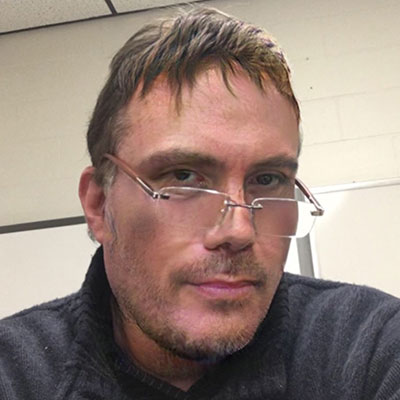
Chris L. Kavanau
Associate Professor
Education
B.S., 2004, California State University Los Angeles
Ph.D., 2010, The Mount Sinai School of Medicine, of New York University
Dr. Kavanau directs ESU’s Pre-Physical Therapy concentration and teaches courses in Human Anatomy & Physiology and Animal Physiology. He is a computational neuroscientist, with a special interest in artificial neural networks.
Teaching Initerest
Dr. Kavanau teaches Human Anatomy & Physiology for the Health Sciences I & II and also Animal Physiology.
Research Interest
Dr. Kavanau’s research focuses on applying artificial intelligence and computational neuroscience to both electron microscopy image analysis and the analysis of the complex mixtures of signals found in the brain.
Student Group Advising
Dr. Kavanau directs ESU’s Pre-Physical Therapy concentration and is the faculty advisor for ESU’s Pre-Physical Therapy Club.
Publications & Presentations
Kavanau C., Montesano L., Jun. 27 2019. C. Kavanau assignee, US Patent Application Number 20190197332 16/215616. Method And System For Aligning And Classifying Images

Ryan W. Koch
Assistant Professor
Education
B.S., 2015, Rutgers University
M.S., 2018, Oklahoma State University
Ph.D., 2024, Oklahoma State University
Dr. Koch directs ESU’s Medical Technology and Laboratory Medicine programs. He teaches Parasitology and Microbiology. His research interests are in the areas of parasite transmission and life cycles, wildlife diseases, and co-infection dynamics.
Publications & Presentations
Koch, R.W., Hoarau, A.O.G., de Ruyter, T., Duffy, C., Pascarosa, L., Campbell, K.A., Maynard, C.L., Cushman, A., Flick, H., Musselman, A., Patsko, J., Bealer, R., Rhone, G., Casalena, M.J., Di Salvo, A., Duren, K., Miller, E.A., Armstrong, J.T., Sobotyk, C., Buderman, F.E., Niedringhaus, K.D., Geary, B., Larsen, R.S., Anis, E., Gagne, R.B. 2026. Risk factors and coinfection dynamics of pathogens in wild turkeys (Meleagris gallopavo) from Pennsylvania, USA. Ecology and Evolution. 16: e73079. https://doi.org/10.1002/ece3.73079
Koch, R.W., Ozuna, G.C., Bolek, M.G. 2026. Histopathologic evaluation, ultrastructure, and molecular characterization of acanthocephalan infections in freshwater turtles. Journal of Wildlife Diseases. https://doi.org/10.7589/JWD-D-25-00081
Koch, R.W., and Bolek, M.G. 2025. Review of the acanthocephalans of turtles: Diversity, distribution, and turtle host-parasite associations. Comparative Parasitology. 92: 14–34. https://doi.org/10.1654/COPA-D-24-00009
Koch, R.W. 2024. A link between macroinvertebrate functional diversity and fish parasite diversity in the New Jersey Pine Barrens. Bios. 95: 19–29. https://doi.org/10.1893/BIOS-D-23-00005
Koch, R.W., Brandao, J.L., Riding, C.S., Loss, S.R., Steckley, A., and Reichard, M.V. 2023. Examination of wild birds and feral hogs from Oklahoma, USA, for infection with Trichinella. Proceedings of the Oklahoma Academy of Science. 103: 41–48.
Thomas C. LaDuke
Associate Professor
Education
B.S., 1981, Michigan State University
M.S., 1983, Michigan State University
Ph.D., 1991, City University of New York
Dr. LaDuke is a broadly-trained organismal biologist who teaches courses in Field Zoology, Comparative Vertebrate Anatomy, Herpetology, and Tropical Ecosystems. He has research interests in herpetology, vertebrate anatomy, vertebrate paleontology, and tropical biology.
Teaching Interest
Dr. LaDuke teaches courses in Field Zoology, Comparative Vertebrate Anatomy, and Herpetology. He also teaches Biology of Tropical Ecosystems, which includes a field trip to Costa Rica
Research Interest
Dr. LaDuke does research on the morphology, systematics, and conservation of amphibians and reptiles. He has special interests in Neotropical herpetology and in paleontology.
Student Group Advising
Dr. LaDuke serves as the advisor for the Pre-Veterinary students within the Pre-Med concentration.
Publications & Presentations
Murman, K., and T.C. LaDuke. 2017. Comparative dietary analysis of five species of streamside salamander in Pennsylvania. Presentation at the Annual Meeting of the Pennsylvania Academy of Science.
Cannon, S., and T.C. LaDuke. 2016. Niche partitioning by shelter site selection in Neotropical tree frogs of northeastern Costa Rica. Presentation at the Ichthyologists and Herpetologists Annual Meeting.
Lattanzio, M.S., and T.C. LaDuke. 2012. Habitat use and activity budgets of emerald basilisks (Basiliscus plumifrons) in northeast Costa Rica. Copeia 2012(3):4 65-471.
LaDuke, T.C., D.W. Krause, J.D. Scanlon, and N.J. Kley. 2010. A Late Cretaceous (Maastrichtian) snake assemblage from the Maevarano Formation, Mahajanga Basin, Madagascar. Journal of Vertebrate Paleontology 30(1):109-138.
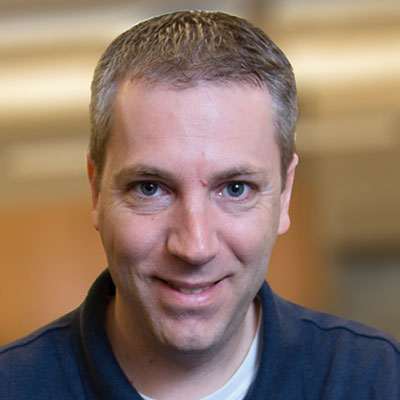
Joshua S. Loomis
Associate Professor
Education
B.A., 1998, University of Florida
Ph.D., 2003, Pennsylvania State University
Dr. Loomis is a microbiologist and virologist who teaches courses in Microbiology, Applied Microbiology, and Virology. He conducts research on mixed microbial biofilms, antibiotics, and the history of epidemic diseases.
Teaching Interest
Dr. Loomis teaches Microbiology, Applied Microbiology, Pathogenic Microbiology, and Virology.
Research Interest
Dr. Loomis conducts research in various topics in microbiology and virology, including mixed microbial biofilms, antibiotic discovery, and the history of epidemic diseases.
Student Group Advising
Dr. Loomis is the faculty advisor for the Pre-Medicine concentration and he also advises the Pre-Medicine Club.
Publications & Presentations
Loomis, J.S. 2018. Epidemics: The Impact of Germs and Their Power over Humanity. ABC-CLIO.
Lin, Y.J., L. Alsad, F. Vogel, S. Koppar, L. Nevarez, F. Augste, J. Seymour, A. Syed, K. Christoph, and J.S. Loomis. 2013. Interactions between Candida albicans and Staphylococcus aureus within mixed species biofilms. BIOL 84(1): 30-39.
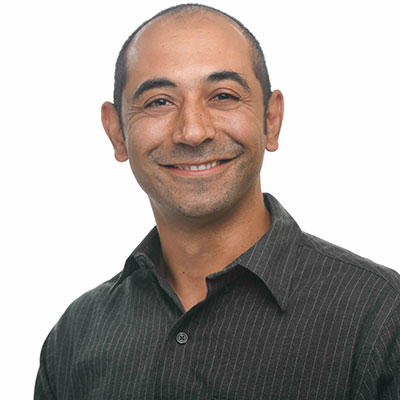
Jose Bernardo Mesa Cruz
Assistant Professor
Education
B.V.M., 2006, Universidad Nacional de Colombia
M.Sc., 2014, Virginia Tech
Ph.D., 2018, Virginia Tech
Dr. Mesa is a physiological ecologist who teaches Animal Physiology and Introductory Biology. His research assesses responses of terrestrial vertebrates to environmental change, including anthropogenic ecological modifications. He works across multiple disciplines to develop molecular, cellular, and organismal monitoring techniques to inform conservation programs.
Teaching Interest
Dr. Mesa teaches Animal Physiology and Introductory Biology.
Research Interest
Dr. Mesa has a broad multidisciplinary interest that includes: environmental DNA (eDNA) surveys of ranavirus, and Chytrid fungus in Pennsylvania, American black bear (Ursus americanus) hibernation physiology, Guanaco (Lama guanicoe) population monitoring using drones, Grand Cayman blue iguana (Cyclura lewisi) and domestic cat (Felis catus) population monitoring using camera traps and spatial population modeling.
Publications & Presentations
Mesa-Cruz J. B., Lopez-Soliz, M., Mears J., Stauffer A. 2024. Environmental DNA (eDNA) Analysis Reveals Presence of Chytrid Fungus and Ranavirus in The Southern End of Michaux State Forest, Pennsylvania. Pennsylvania Fish and Wildlife Diversity Forum, Pennsylvania Biological Survey. State College, PA, USA.
O’Hehir S., Mesa-Cruz J. B., Harding L., Proctor C., Burton F., Mueller M., Townley S. 2023. Letting the cat into the bag: Responses of feral cats to trapping efforts and management implications in the Salina Reserve. Iguana Specialist Group Conference. Peten, Guatemala.
Ziyuan H., Proctor C., Kevin H., Bellur S., Kumar Tatikonda P., Harding L., Burton F., Mesa-Cruz J. B. 2023. Automation of Camera-trap Image Sorting Using Planarian DenseNet Neural Networks: A Data Science Odyssey into the Wild. The Wildlife Society Annual Conference, Louisville, KY, USA.
Holcombe B., Mesa-Cruz J. B., Kelly M. 2023. Factors Influencing Duration of Behaviors in American Black Bears (Ursus americanus) Adult Females and Their Cubs Surrounding Hibernation. The Wildlife Society Annual Conference, Louisville, KY, USA.
Mesa-Cruz J. B., Proctor C., Harding L., Burton F. 2023. Establishing Camera-trap Arrays to Conduct Population Monitoring of the Endangered Grand Cayman Blue Iguana. The Wildlife Society Annual Conference, Louisville, KY, USA.
Mesa-Cruz J. B., Proctor C., Zanon-Martinez J., Sarvis A. 2023. Novel Drone Population Monitoring of Guanaco (Lama guanicoe) and Invasive Species at Lihué Calel National Park, La Pampa, Argentina. Presidential Research Presentation Series, Harrisburg University. Harrisburg, PA, USA.
Calhoun, T., Mesa-Cruz, J. B., Holcombe, B. E. Osborn, D. A. D’Angelo, G. J., Lafon, N., Kelly, M. J. 2023. Splitting hairs: Differentiating fawn from adult deer by hair width. Journal of Mammalogy 104: 324-332.
Brown, P., Chen, Y., Ivanova, M., Leekitcharoenphon, P., Parsons, C., Niedermeyer, J., Gould, N., Strules, J., Mesa-Cruz, J.B., Kelly, M.J. and Hooker, M.J. 2023. Draft Genome Sequences of 158 Listeria monocytogenes Strains Isolated from Black Bears (Ursus americanus) in the United States. American Society for Microbiology e00248-23.
Mesa-Cruz, J. B., Olfenbuttel, C., Vaughan, M., Sajecki, J. L., Kelly, M. J. 2020. Litter size and cub age influence weight gain and development in American black bears (Ursus americanus). Journal of Mammalogy 101: 564-573.
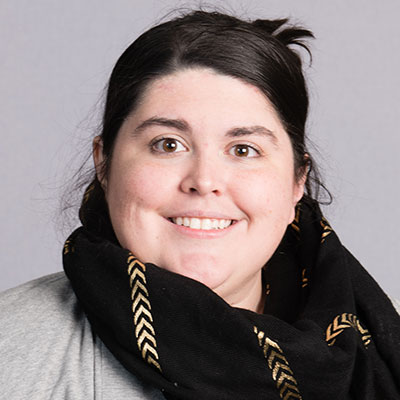
Emily Rollinson
Associate Professor, Co-Chair
Education
B.A., 2009, Skidmore College
Ph.D., 2016, State University of New York at Stony Brook
Dr. Rollinson serves as the Biology Graduate Program Coordinator and she teaches courses in General Ecology, Plant Ecology, and Biogeography, and also a graduate course in Research Design and Analysis. She is a plant ecologist and her research focuses on plant community ecology, riparian habitats, and invasive plant species.
Teaching Interest
Dr. Rollinson teaches courses in General Ecology, Plant Ecology, and Biogeography, and also a graduate course in Research Design and Analysis.
Research Interest
Dr. Rollinson does research in plant ecology, diversity and assembly mechanisms of riparian plant communities, and on biological invasions, including invasive plants.
Student Group Advising
Dr. Rollinson serves as the Biology Graduate Program Coordinator and advises students in the General Biology concentration.
Publications & Presentations
Rollinson, E.J. and J. Ness. 2021. Surrounded by increasingly distant things: community phylo-proximity as predictor of invasion dynamics. Presentation at: Botanical Society of America Annual Meeting.
Rollinson, E.J. 2020. Natural history education and community outreach through the campus arboretum. Presentation at: Botanical Society of America Annual Meeting.
Kattje, J., G. Bönisch, S. Díaz, S. Lavorel, I.C. Prentice, P. Leadley, S. Tautenhahn, G. Werner […] E.J. Rollinson […] and C. Worth. 2020. Twelve years of TRY – towards a third generation of plant trait data assimilation and sharing. Global Change Biology 26(1): 119-188.
Lowry, E., E.J. Rollinson, A.J. Laybourn, T. Scott, M. Aiello-Lammens, S.M. Gray, J. Mickey, and J. Gurevich. 2013. Biological invasions: a field synopsis, systematic review, and database of the literature. Ecology & Evolution 3(1) 182-196.
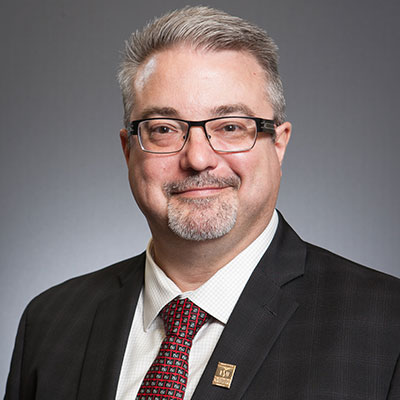
Thomas Tauer
Professor
Education
B.S., 1990, St. Cloud State University
Ph.D., 1996, University of Nebraska Medical Center
Dr. Tauer is a cell and molecular biologist who teaches courses in introductory biology, biotechnology, and eukaryotic cell culture.
Teaching Interest
Dr. Tauer teaches courses in Introductory Biology, Introduction to Biotechnology, and Cell Culture.
Research Interest
Dr. Tauer is a cell and molecular biologist with specific interests in molecular genetics, bioinformatics, and characterization of protein coding sequences.
Student Group Advising
Dr. Tauer advises students in the General Biology concentration.
Publications & Presentations
Tauer, T.J. 2012. Commentary: The marine science consortium…Hands-on, feet-wet education. Journal of the Pennsylvania Academy of Science 86(1): 1-2.
Dean, M., J. Welch, C. Brandt, and T. Tauer. 2009. Surface analyses of biocements from Pectinaria gouldii (Polychaeta: Pectinariidae) and Phragmatopoma lapidosa (Polychaeta: Sabellariidae). Zoosymposia 2: 329-337.
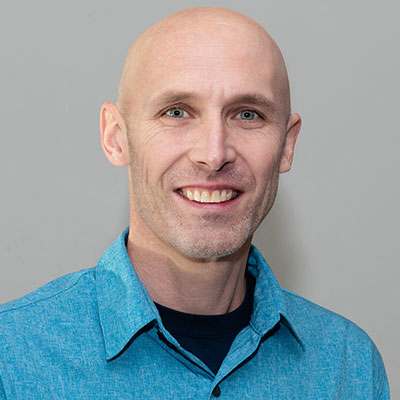
Matthew S. Wallace
Professor
Education
B.S., 1995, University of Connecticut
M.S., 1999, North Carolina State University
Ph.D., 2003, North Carolina State University
Dr. Wallace serves as Department Chair for Biological Sciences and teaches Insects and Human Life, General Entomology, and Insect Systematics. He does research on insect diversity and classification, with a specific interest in the systematics of treehoppers.
Teaching Interest
Dr. Wallace teaches a non-majors course in Insects and Human Life, plus upper-level courses in General Entomology and Insect Systematics.
Research Interest
Dr. Wallace is an insect systematist and conducts research on an interesting family of insects, the treehoppers.
Student Group Advising
Dr. Wallace advises students in the General Biology concentration.
Publications & Presentations
Wallace, M.S. 2018. A new species of Telamonini from the eastern United States and the taxonomic limits of Telamona salvini Distant (Hemiptera: Smiliinae). Proceedings of the Entomological Society of Washington 120(3): 605-615.
Wallace, M.S. 2014. The host plants of the Telamonini treehoppers (Hemiptera: Membracidae: Smiliinae) and the first diagnoses of nymphs for 14 species. Zootaxa 3878(2): 146-166.
Wallace, M.S., and L.L. Deitz. 2004. Phylogeny and Systematics of the Treehopper Subfamily Centrotinae (Hemiptera: Membracidae). Memoirs on Entomology, International, 19: iv + 377 pp.

Tracy Whitford
Assistant Professor
Education
B.S., 1984, Wright State University
Ph.D., 1993, State University of New York at Stony Brook
Dr. Whitford advises the Biology Secondary Education majors and teaches courses in Genetics, Invertebrate Zoology, and Molecular Biology. Her research is on the biology of regeneration in marine annelids.
Teaching Interest
Dr. Whitford teaches courses in Introductory Biology, Genetics, Molecular Biology, and Invertebrate Zoology.
Research Interest
Dr. Whitford does research on the biology of regeneration in marine annelid worms.
Student Group Advising
Dr. Whitford advises the Biology Secondary Education concentration and is the faculty advisor for the Biology Club.
Publications & Presentations
Whitford, T.A., and J.D. Williams. 2016. Anterior regeneration in the polychaete Marenzelleria viridis (Annelida: Spionidae). Invertebrate Biology 2016: 357-369.
Matsumoto, Y., V. Rodriguez, T.A. Whitford, N. Beeharry, H. Ide, and A.E. Tomkinson. 2015. Synergistic enhancement of 5-fluorouracil cytotoxicity by deoxyuridine analogs in cancer cells. Oncoscience. Advanced Online Publication, 9 February 2015.
Brennan, Z., and T.A. Whitford. 2015. Regeneration of the anterior nervous system in Marenzelleria viridis. Presentation at Undergraduate Research and Creative Activity Symposium, East Stroudsburg University.
Whitford, T.A., and J.D. Williams. 2011. Morphogenesis during anterior regeneration in Marenzelleria viridis. Platform presentation at 2nd International Congress on Invertebrate Morphology, Harvard University.
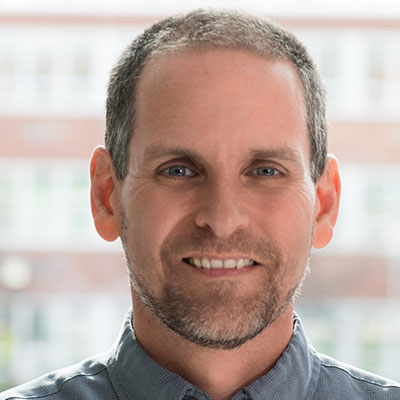
Paul B. Wilson
Associate Professor
Education
B.S., 1988, Lafayette College
Ph.D., 1996, Washington University
Dr. Wilson directs ESU’s Environmental Studies program and teaches courses in environmental science, evolutionary biology, and ecology. He has done research on the biogeography of freshwater fishes and is currently involved with monitoring of aquatic ecosystems as part of the Delaware River Watershed Initiative (DRWI). He also performs community service related to freshwater ecology.
Teaching Interest
Dr. Wilson teaches courses in Stream Ecology, Organic Evolution, and Environmental Biology.
Research Interest
Dr. Wilson has done research on the biogeography of freshwater fishes and is currently focusing on traditional freshwater ecology. He is involved with ongoing monitoring of aquatic ecosystems as part of the Delaware River Watershed Initiative (DRWI). Learn more
Student Group advising
Dr. Wilson directs ESU’s Environmental Studies program and also serves as the faculty advisor for ESU’s Environmental Club and for charity: water.
Publications & Presentations
Tiegs, S., et al. 2019. Global patterns and drivers of ecosystem functioning in rivers and riparian zones. Science Advances 5(1): eaav0486. doi: 10.1126.
Reeves*, Christa, Kristen Roth*, and Paul Wilson. 2019. From golf course to wildlife refuge; quantifying restoration efforts with low-cost sensor technology using stream discharge and turbidity. Annual meeting Northeast Natural History Conference.
Barrett, B., et al. 2018. Plan for Clean Water for Monroe County: A Municipal Guide to Protecting Land that Protects Water. Report published by Brodhead Watershed Association, P. Wilson and B. Evans, project advisors. Published by William Penn Foundation & Open Space Institute.
Wilson, P.B. 2017. Projects to Improve and Maintain Water Quality in the Delaware River Watershed, Delaware River Watershed Forum (5th Annual), Coalition for the Delaware River Watershed, P.B. Wilson, Session Speaker and Moderator.
Brennan, L., and P. Wilson. 2017. Water Quality Monitoring Using Macroinvertebrates as Biological Indicators in Pocono Mountain Creeks, 92nd Annual Meeting of the Pennsylvania Academy of Science, Delaware Valley University.

Shiqi Zhang
Assistant Professor, Co-Chair
Education
B.S., 2012, Northwest A&F University, China
Ph.D., 2018, University of California, Davis
Dr. Zhang is a plant physiologist who teaches courses in Introductory Biology, Plant Physiology, and Plant Responses to Environmental Stress. Her research is in plant physiology, and in particular intracellular phosphate dynamics in roots during arbuscular mycorrhizal symbiosis.
Teaching Interest
Dr. Zhang teaches courses in Introductory Biology, Plant Responses to Environmental Stress, and Plant Physiology.
Research Interest
Dr. Zhang does research in plant physiology, focusing on understanding intracellular phosphate dynamics in roots during arbuscular mycorrhizal symbiosis, which is an ancient and widespread mutualism between plants and arbuscular mycorrhizal fungi.
Student Group Advising
Dr. Zhang advises students in the General Biology concentration.
Publications & Presentations
Zhang, S., Daniels, D.A., Ivanov, S., Jurgensen, L., Müller, L.M., Versaw, W.K. and Harrison, M.J. 2022. A genetically encoded biosensor reveals spatiotemporal variation in cellular phosphate content in Brachypodium distachyon mycorrhizal roots. New Phytologist, 234: 1817-1831.
Elias Bassil, Shiqi Zhang, Haijun Gong, Hiromi Tajima, Eduardo Blumwald. 2019. Cation specificity of vacuolar NHX-Type cation/H+ antiporters. Plant Physiology, 179 (2): 616–629.