
T. Michelle Jones-Wilson
Professor, Department Chair
Education
B.S., 1988, Lafayette College
M.A., 1990, Washington University
Ph.D., 1995, Washington University
I have the privilege of mentoring 12-25 biochemistry and chemical biotechnology graduates each year. Our diverse group is successful in industry and graduate and professional school. My research areas are in the Science of Student Success funded through the NSF Clear Path grant and in water quality in the Pocono region.
Teaching Interest
I teach a variety of courses from the 100 level, chemistry of science majors and non majors, 200 level organic chemistry, 300 level biochemistry to 400 level courses like Proteins and Nucleic Acids and Biochemical Methods. I have taught more than 31 preparations throughout the curriculum in the Department of Chemistry and Biochemistry. My favorite is Chem 350 - Biochemical Energetics
Research Interest
Dr. Jones-Wilson's research currently encompasses 2 broad areas:
The Science of Teaching and Learning (STL) - Students in the Jones-Wilson group participating in the STL area work to develop laboratory procedures that effectively illustrate concepts in the biochemistry and biochemical energetics areas. Students develop ideas, refine experimental parameters, communicate findings and finally lab test the experiments designed.
Dr. Jones-Wilson is currently Principle Investigator on the NSF S-STEM grant Clear Path - Bachelor's Degree Completion Scholarships. - In Clear Path community college transfer students are supported in finishing their bachelor's degrees in 10 identified STEM areas. The Clear Path team (Co-PIs Dr. Olivia Carducci and Dr. Bonnie Green) work to understand how the grant identified developmental mechanisms work independently and synergistically to promote student success.
Water Quality Monitoring and Watershed Protection - Students working on water quality projects work with Dr. Jones-Wilson and Dr. Paul Wilson, Environmental Science, Department of Biological Sciences, ESU. In conjunction with Dr. Paul Wilson, lead scientist for the William Penn Foundation funded Pocono-Kittatinny Cluster of the Delaware River Watershed Initiative, students verify field testing and methods used in the water monitoring project.
Service
Service to students and the university and community is a critical part of the job of a faculty member. Over my career I have advised student organizations and served on numerous university and APSCUF committees.
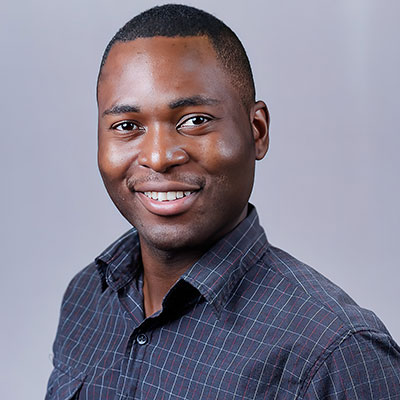
René Fuanta
Associate Professor
Education
B.S., 2007 - 2010, University of Buea
Ph.D., 2013 - 2018, Auburn University
I enjoy discussions on enzyme mechanisms - the ‘science fiction’ behind their catalysis.
Teaching Interest
Introduction to Biochemistry, Biochemical Assays and Method Development, Enzymology and Nucleic Acid Chemistry Metabolic Biochemistry
Research Interest
My research is a hybrid of mechanistic enzymology, proteomics and molecular biology.
Service
I serve on several platforms both on- (UWCC, FDR, FDI, etc) and off-campus (ACS, ASBMB, NOBCChE, etc). Other academic service includes reviewing for journals like ACS ID, BBA Proteins and Proteomics, some MDPIs, etc.
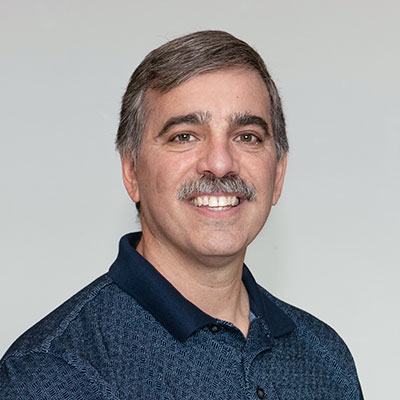
William M. Loffredo
Professor, Pre-Pharmacy Program Advisor
Education
B.S., 1982, Lebanon Valley College
Ph.D., 1988, Ohio State University
My primary teaching duties include general chemistry, organic chemistry I, II and III as well as biochemistry I and II.
Teaching Interest
I enjoy teaching organic and biochemistry.
Research Interest
My research interest are along the chemical education lines these days.
Service
I serve as the coordinator and advisor for the pre-pharmacy program.
Student Group Advising
I am currently serving as the faculty advisor for the ACS Student Affiliate chapter at ESU.

Steven Boyer
Associate Professor
Education
B.S., 2012, Elizabethtown College
Ph.D., 2017, Binghamton University
Teaching Interest
General Chemistry and Inorganic Chemistry
Research Interest
Metal-organic frameworks (MOFs) and Degradation of organic pollutants
Publications & Presentations
Dwyer, D.B., Lee, D.T., Boyer, S.M., Bernier, W.E., Parsons, G.N., Jones Jr., W.E. Toxic organophosphate hydrolysis using nanofiber-templated UiO-66NH2 metal-organic framework polycrystalline cylinders. ACS Applied Materials & Interfaces 2018, 10, 25794-25803.
McCarthy, D.L., Liu. J., Dwyer, D.B., Troiano, J.L., Boyer, S.M., DeCoste, J.B., Bernier, W.E., Jones, W.E. Electrospin metal-organic framework polymer composites for the catalytic degradation of methyl paraoxon. New Journal of Chemistry 2017, 41, 8748-8753.
Boyer, S.M., Liu, J., Zhang, S., Ehrlich, M.I., McCarthy, D.L., Tong, L., DeCoste, J.B., Bernier, B.E., Jones Jr., W.E. The role of ruthenium photosensitizers in the degradation of phenazopyridine with TiO2 electrospun fibers. Journal of Photochemistry and Photobiology A:Chemistry 2016, 329, 46-53.

Mary Doherty
Instructor
Education
B.S., 1982, Thomas More College
M.S., 1987, Purdue University
Teaching Interest
General Chemistry, Organic Chemistry and Nursing Chemistry labs.
Research Interest
Development and improvement of experiments in General Chemistry Organic Chemistry and Nursing Chemistry labs.
Service
Planning and presenting at the International Day of Women and Girls in Science. Collecting food from campus donations and stocking shelves at the ESU Warrior Food Pantry.
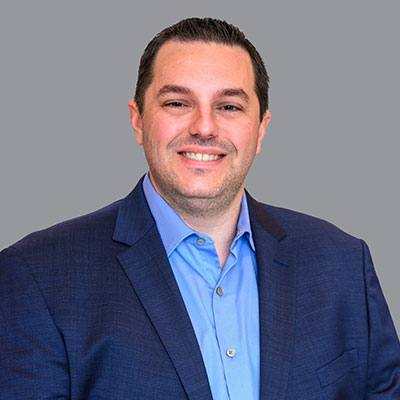
Gregory Boyce
Associate Professor
Education
B.S., 2006, Emory University
Ph.D., 2011, UNC Chapel Hill
I am a synthetic organic chemist who enjoys teaching courses in Organic Chemistry, General Chemistry, and Advanced Topics in Organic Chemistry. My research focuses on the concise synthesis of biologically relevant natural products and the development of new reactions. Undergraduates interested in joining our team are encouraged to schedule an appointment with Dr. Boyce to discuss what opportunities are available.
Teaching Interest
General Chemistry, Organic Chemistry, Organic Chemistry Laboratory
Research Interest
My group focuses on the synthesis of biologically relevant natural products, the development of new reactions, and the use of vitamin B6 as a stimuli-responsive chemical delivery system. Students in my lab will learn to setup reactions, purify compounds by column chromatography, distillation, and recrystallization, and analyze results by TLC, NMR, IR, polarimetry, HPLC, LCMS and GCMS.
Publications & Presentations
Boyce, G. R.; Musolino, S. F.; Yang, J.; Smith, A. D.; Taylor, J. E. “Arylboronic acid-catalyzed dehydrative racemization of secondary and tertiary alcohols.” J. Org. Chem. 2022, 87, 13367-13374.
Wu, J.; Young, C. M.; Watts, A. A.; Slawin, A. M. Z.; Boyce, G. R.; Bühl, M.; Smith, A. D. "Isothiourea-catalyzed enantioselective Michael addition of malonates to α,β-unsaturated aryl esters." Org. Lett. 2022, 24, 4040-4045.
Weeks, K. L.; Williams, J. D.; Boyce, G. R.* “A three-step enantioselective synthesis of (+)- and (-)-a-thujone.” Org. Biomol. Chem. 2021, 19, 8018-8020.
Steele, J. H.; Bozor, M. X.; Boyce, G. R.* “Transmutation of scent: An evaluation of the synthesis of methyl cinnamate, a commercial fragrance, via a Fischer esterification for the second-year organic chemistry laboratory.” J. Chem. Educ. 2020, 97, 4127-4132.
Weeks, K. L.; Rutkowski, K. R.; Morales Loyola, A. A.; Boyce, G. R.* “Utilization of pyridoxal acetal salts as water-triggered, slow-release pro-fragrances.” New J. Chem. 2018, 42, 15538-15540.

Emily Petsche
Instructor and Lab Technician
Education
B.S., 2021, East Stroudsburg University
M.S., 2023, University of Scranton
Along with my student workers, I prep chemicals and set up labs for the department.
Research Interest
As an undergraduate student, I completed independent research in Biochemistry under Dr. Fuanta. My thesis research in graduate school was also in Biochemistry, focused on metabolic enzymes and their role maintaining homeostasis in the brain.
Publications & Presentations
Foley, T.D., Huang, W.C., Petsche, E.A. et al. Protein vicinal thiols as intrinsic probes of brain redox states in health, aging, and ischemia. Dis 39, 929–940 (2024).

Bhaskar Chilukuri
Assistant Professor
Education
B.S., 2007, Acharya Nagarjuna University, India
Ph.D., 2012, University of North Texas
Bhaskar Chilukuri has joined the Department of Chemistry and Biochemistry in 2025. He is passionate about teaching physical chemistry in a practical and interactive format, helping students connect complex concepts to real-world applications. Dr. Chilukuri’s research centers on studying the structure and chemistry of single molecules on surfaces using scanning probe microscopy and computational modeling. Outside the lab, he enjoys traveling with his family and playing with his two young children.
Teaching Interest
General Chemistry I, II, Physical Chemistry, Biochemical Energetics, Chemistry Seminar, Applied Computational Chemistry
Research Interest
Research in the Chilukuri lab involves studying molecular self-assembly and chemistry on ordered surfaces using experimental characterization and computational modeling. The projects are focused on investigating molecular interactions between adsorbate-adsorbate, adsorbate-substrate and harnessing them toward tunable molecular assembly. Research involves experimental characterization with scanning tunneling microscopy (STM) and analysis with multiscale modeling using quantum mechanical and molecular dynamics methodology.
Publications & Presentations
“Exploring the Surface Chemistry of Cobalt Porphyrin Complexed with Iodine Using Single Molecule Microscopy and Theory” Chiranjeevulu, K.; Nandi, G.; Johnson, K. N.; Pedaballi, S.; Gurdumov, K.; Chilukuri, B.; Hipps, K. W.; Mazur, U. J. Phys. Chem. C 2025, 129, 16, 7717-7729.
“Peripheral Substituent and Central Metal Effects on Molecular Self-assembly of Phthalocyanine using STM Experiments and Ab-Initio Simulations” Beckman, M. T.; Suthaharan, S.; Chiranjeevulu, K.; Mazur, U; Hipps, K. W.; Chilukuri, B. J. Porphyrins Phthalocyanines, 2025, 29, 250-261.
“Tailoring the dielectric and ferroelectric response of mixtures containing bent-core liquid crystals through light-irradiation and composition” Liebsch, J.; Strachan, R.; Suthaharan, S.; Dominguez-Candela, I.; Auria-Soro, C.; San-Millan, A.; Walker, R.; Chilukuri, B.; Blanca Ros, M.; Martinez-Felipe, A. Journal of Molecular Liquids, 2024, 399, 124371.
“In-situ Study of a Highly Cooperative Thiophene and Co(II)porphyrin Complexation Reaction at the Solution/Solid Interface Supported by Computational Modeling” Johnson, K. N.; Rana, S.; Chilukuri, B.; Hipps, K.; Mazur, U. J. Phys. Chem. C, 2022, 126 (45), 19188–19199.
“Role of the Supporting Surface in the Thermodynamics and Cooperativity of Axial Ligand Binding to Metalloporphyrins at Interfaces” Johnson, K. N.; Chilukuri, B.; Fisher, Z. E.; Hipps, K. W.; Mazur, U.; Current Organic Chemistry, 2022, 26, 553-562.
“Au3-to-Ag3 coordinate-covalent bonding and other supramolecular interactions with covalent bonding strength” Lu, Z.; Chilukuri, B.; Yang, C.; Rawashdeh, A. M.; Arvapally, R. K.; Tekarli, S. M.; Wang, X.; Cardenas, C. T.; Cundari, T. R.; Omary, M. A. Chem. Sci., 2020, 11, 11179-11188.
“Cooperative Binding of 1-Phenylimidazole to Cobalt(II) Octaethylporphyrin on Graphite: A Quantitative Imaging and Computational Study at Molecular Resolution” Korpany, K. V.; Chilukuri, B.; Mazur, U.; Hipps, K. W. J. Phys. Chem. C 2020, 124, 34, 18639-18649.
“Structure, Properties, and Reactivity of Porphyrins on Surfaces and Nanostructures with Periodic DFT Calculations” Chilukuri, B.; Mazur, U.; Hipps, K. W. Appl. Sci. 2020, 10(3), 740.
“Connecting Solution-Phase to Single-Molecule Properties of Ni (Salophen)” Zhang, Y.C.; Chilukuri, B.; Hanson, T.B.; Heiden, Z.M.; Lee, D.Y. J. Phys. Chem. Lett., 2019, 10, 13, 3525-3530.
“Cooperativity and coverage dependent molecular desorption in self-assembled monolayers: computational case study with coronene on Au (111) and HOPG” Chilukuri, B.; Mazur, U.; Hipps, K. W. Phys. Chem. Chem. Phys., 2019, 21 (20), 10505-10513.
“Tuning Optoelectronic Characteristics of Ionic Porphyrin Crystalline Assemblies” Borders, B.; Adinehia, M.; Chilukuri, B.; Ruf, M.; Hipps, K. W.; Mazur, U. J. Mater. Chem. C, 2018, 6, 4041-4056.
“Structure-Function Correlation of Photoactive Ionic pi-Conjugated Binary Porphyrin Assemblies” Adinehnia, M.; Borders, B.; Ruf, M.; Chilukuri, B.; Hipps, K. W.; Mazur, U. MRS Advances, 2017, 2(42), 2267-2273.
“Comprehensive structure-function correlation of photoactive ionic π-conjugated supermolecular assemblies: an experimental and computational study.” Adinehnia, M.; Borders, B.; Ruf, M.; Chilukuri, B.; Hipps, K. W.; Mazur, U. J. Mater. Chem. C 2016, 4(43), 10223-10239. (Hot paper listed by 2016 J Mater. Chem. C)
“Surface directed reversible imidazole ligation to nickel (ii) octaethylporphyrin at the solution/solid interface: a single molecule level study” Nandi, G.; Chilukuri, B.; Hipps, K. W.; Mazur, U. Phys. Chem. Chem. Phys., 2016, 18, 20819-20829.
“A Kinetically Trapped Two-Component Self Assembled Adlayer” Jahanbekam, A.; Chilukuri, B.; Mazur, U.; Hipps, K. W. J. Phys. Chem. C, 2015, 119 (45), 25364–25376.
“Polymorphic, Porous and Host-Guest Nanostructures Directed by Monolayer-Substrate Interactions: Epitaxial Self-Assembly Study of Cyclic Trinuclear Au(I) Complexes on HOPG at the Solution-Solid Interface” Chilukuri, B.; McDougald Jr, R. N.; Ghimire, M. M.; Nesterov, V. N.; Mazur, U.; Omary, M. A.; Hipps, K. W. J. Phys. Chem. C, 2015, 119 (44), 24844–24858.
“Molecular and Electronic Structure of Cyclic Trinuclear Au(I) Carbeniate Complexes: Insights for Structure/Luminescence/Conductivity Relationships” McDougald Jr, R. N.; Chilukuri, B.; Jia, H.; Perez, M. R.; Rabaâ, H.; Wang, X.; Nesterov, V. N.; Cundari, T. R.; Gnade, B. E.; Omary, M. A. Inorg. Chem. 2014, 53 (14), 7485–7499.
“Effect of Dispersion on Surface Interactions of Cobalt(II) Octaethylporphyrin Monolayer on Au(111) and HOPG(0001) Substrates: A Comparative First Principles Study” Chilukuri, B.; Mazur, U.; Hipps, K. W. Phys. Chem. Chem. Phys., 2014, 16 (27), 14096 - 14107.
“Structure and Bonding of Palladium Oxos as Possible Intermediates in Metal-Carbon Oxy-insertion Reactions”, Figg, T. M.; Schoendorff, G.; Chilukuri, B.; Cundari, T. R. Organometallics, 2013, 32 (17), 4993.
“Electronic and Charge-Transport Properties of the Au3(CH3N=COCH3)3 Crystal: A Density Functional Theory Study” Zhu, L.; Coropceanu, V.; Yi, Y.; Chilukuri, B.; Cundari, T. R.; Brédas, J-L. J. Phys. Chem. Lett., 2013, 4 (13)2186–2189.
“Use of [SbF6]− to Isolate Cationic Copper and Silver Adducts with More than One Ethylene on the Metal Center” Fianchini, M.; Campana, C. F.; Chilukuri, B.; Cundari, T. R.; Petricek, V.; Dias, H. V. R. Organometallics 2013, 32 (10), 3034-3041.
“Surface Interactions of Au(I) Cyclo Timer with high and low work function electrode metals”, Chilukuri, B.; Cundari, T. R. Surface Science 2012, 606, 1100–1107.
“Modeling the Deposition of Metal Atoms on a p-Type Organometallic Conductor. Implications for Stability and Electron Transfer”, Chilukuri, B.; Cundari, T. R. J. Phys. Chem. C 2011, 115 (13), 5997–6003.
“Periodic and Molecular Modeling Study of Donor-Acceptor Interactions in (dbbpy)Pt(tdt)•(TENF) and [Pt(dbbpy)(tdt)]2•(TENF)” Cundari, T. R.; Chilukuri, B.; Hudson, J. M.; Minot, C.; Omary, M. A.; Rabaa, H. Organometallics 2010, 29, 795-800.

Jason Hudzik
Instructor
Education
M.S., 2009, New Jersey Institute of Technology
Ph.D., 2013, New Jersey Institute of Technology
My background is in computational chemistry with current research interests focusing on environmental chemistry (alternative fuels, combustion processes, atmospheric chemistry).
Research Interest
My research focuses on the thermodynamics and kinetics of reactions relevant to environmental chemistry, particularly those involving alternative fuels, combustion processes, and atmospheric chemistry. I utilize ab initio and density functional theory computational methods to determine thermochemical properties, using Gaussian software suite, to model chemical kinetics for reactions and create reaction mechanisms, using Reaction Mechanism Generator (RMG) software.
Publications & Presentations
Asatryan, R.; Hudzik, J.; Amiri, V.; Swihart, M. “Internally Catalyzed Hydrogen Atom Transfer (I-CHAT)—A New Class of Reactions in Combustion Chemistry.” Molecules, 2025, 30, 524.
Asatryan, R.; Hudzik, J. M.; Swihart, M. “Intramolecular Catalytic Hydrogen Atom Transfer (CHAT).” The Journal of Physical Chemistry A, 2024, 128, 2169-2190.
Snitsiriwat, S.; Hudzik, J. M.; Chaisaward, K.; Stoler, L. R.; Bozzelli, J. W. “Thermodynamic Properties: Enthalpy, Entropy, Heat Capacity, and Bond Energies of Fluorinated Carboxylic Acids.” The Journal of Physical Chemistry A 2022, 126, 3-15.
Hudzik, J. M.; Bozzelli, J. W.; Asatryan, R.; Ruckenstein, E. “OH-Initiated Reactions of para-Coumaryl Alcohol Relevant to the Lignin Pyrolysis. Part III. Kinetics of H-Abstractions by H, OH, and CH3 Radicals.” The Journal of Physical Chemistry A, 2020, 124, 4905-4915.
Hudzik, J. M.; Barekati-Goudarzi, M.; Khachatryan, L.; Bozzelli, J.W.; Ruckenstein, E.; Asatryan, R. “OH-Initiated Reactions of para-Coumaryl Alcohol Relevant to the Lignin Pyrolysis. Part II. Kinetic Analysis.” The Journal of Physical Chemistry A, 2020, 124, 4875-4904.
Hudzik, J. M.; Stoler, L. R.; Bozzelli, J. W.; Liebman, J. F. “Thermochemistry of Fluorinated Dimethyl and Ethyl Methyl Ethers and Corresponding Radical Species.” Journal of Chemical & Engineering Data 2020, 65, 1594-1616.