Clear Path Scholarships for STEM Transfer Students
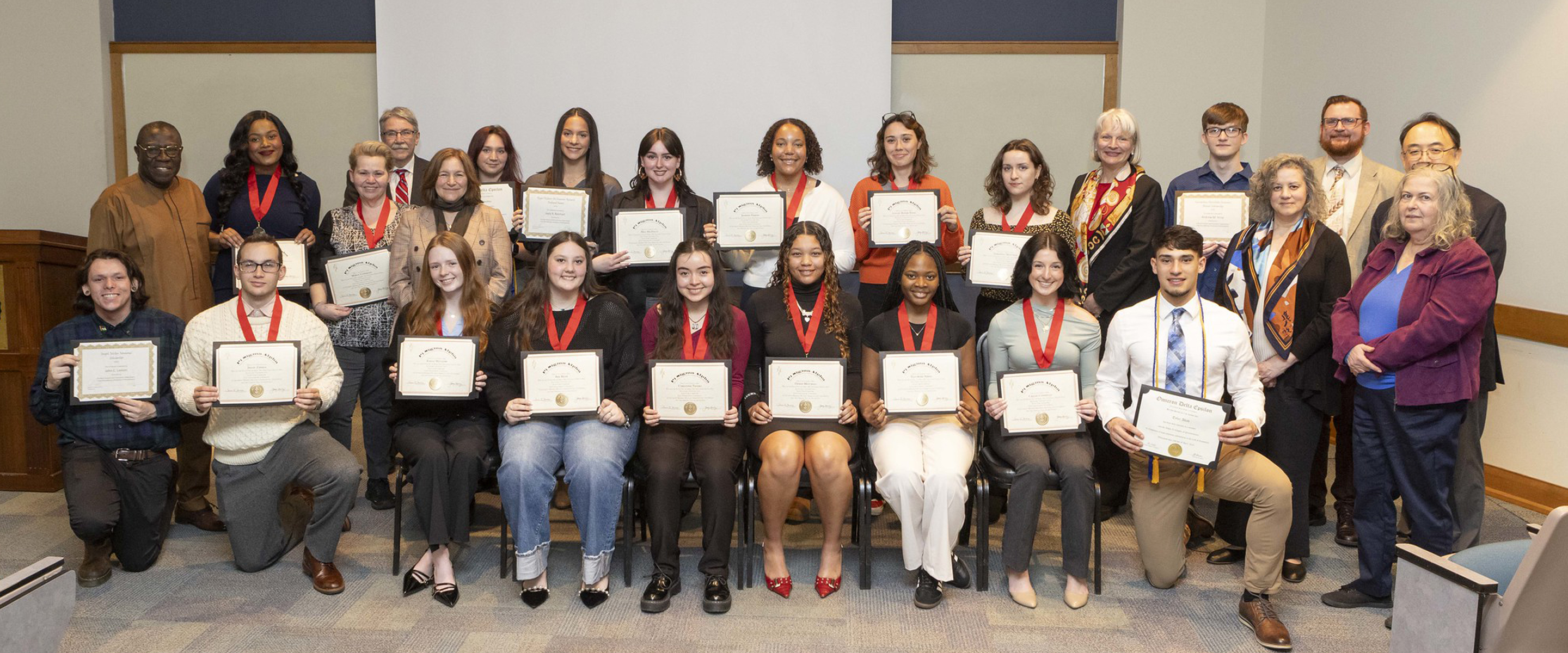
In the largest single grant ever awarded to ESU, the National Science Foundation (NSF) awarded nearly $5 million to help transfer students complete their education at ESU. The five-year grant for the project Clear Path provides scholarships for about 120 students who start their education at community colleges and transfer to ESU for bachelor’s degrees in such science fields as biochemistry, physics, computer science and mathematics.
Clear Path Research
In addition to millions of dollars in scholarships, the grant supports invaluable science education research including mechanisms to ensure that students successfully complete their bachelor’s degree. Faculty associated with this grant expect that understanding how academic practices impact student success will shape future student support and be used to inform policies and practices at community colleges and four year institutions. This objective is also intended to positively impact the 120 students who receive the scholarships as well as future students who would benefit from this model.
Media and News about Clear Path
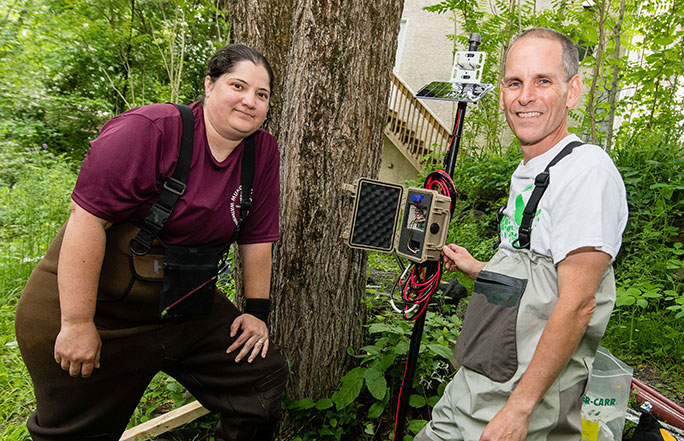 Watch this WNEP news story to see how some of our Clear Path Scholars are getting
real-world experience doing field research for the Delaware River Watershed Initiative:
ESU Student Research Helps Ensure Clean Drinking Water.
Watch this WNEP news story to see how some of our Clear Path Scholars are getting
real-world experience doing field research for the Delaware River Watershed Initiative:
ESU Student Research Helps Ensure Clean Drinking Water.
Helping undergraduate STEM transfer students find a Clear Path to their dreams!
 National Science Foundation awarded ESU a $4 million dollar grant from the Scholarships in Science, Technology, Engineering, and Mathematics (S-STEM) Program for the project entitled Clear Path to Bachelor’s Degree Completion
Scholarships. This project is the culmination of more than three years of work by
Drs. Jones-Wilson, Green, and Carducci who saw that too many students from community
colleges were transferring to the university with numerous college credits but not
enough of the right courses in their major to enable them to graduate on time.*
National Science Foundation awarded ESU a $4 million dollar grant from the Scholarships in Science, Technology, Engineering, and Mathematics (S-STEM) Program for the project entitled Clear Path to Bachelor’s Degree Completion
Scholarships. This project is the culmination of more than three years of work by
Drs. Jones-Wilson, Green, and Carducci who saw that too many students from community
colleges were transferring to the university with numerous college credits but not
enough of the right courses in their major to enable them to graduate on time.*
The overarching goal of Clear Path is to increase STEM student retention and timely baccalaureate degree completion among community college STEM transfers to ESU. Students who meet a certain criteria are selected and awarded scholarships to become Clear Path Scholars. To evaluate the effectiveness of the investigative team’s activities designed to achieve this goal, a standard data collection protocol is being established by Dr. Green to ensure uniformity in reporting student outcomes. When appropriate, a control group will be identified and followed. Individual tracking identification (i.e., student numbers) will be recorded with the data so that longitudinal student participation in activities, and student academic success data will all be stored together. All new measures will be created and validated through an Experiential Learning Activity in Test Construction, Revision, and Validation involving undergraduate students studying test construction who will be supervised by Dr. Green.
 Possibly the most critical component of this project is the investigators’ exploration
and evaluation of the role that specified developmental mechanisms, like academic
grit and academic behavior, play in assuring students’ academic success. When examining
variables associated with student success in STEM, the investigators have identified
five high impact practices, supported by 14 cohort activities that will increase student
retention and baccalaureate completion rates. These practices and activities build
upon the applied psychology literature dedicated to increasing college student success
and have been chosen based on several projects completed at the faculty and university
levels. Through these high impact practices and cohort activities, ESU will increase
student success. Moreover, through formal statistical evaluation, the investigators
will further understand the interaction among the high impact practices, the cohort
activities, the specified developmental mechanisms, and college level academic achievement
Possibly the most critical component of this project is the investigators’ exploration
and evaluation of the role that specified developmental mechanisms, like academic
grit and academic behavior, play in assuring students’ academic success. When examining
variables associated with student success in STEM, the investigators have identified
five high impact practices, supported by 14 cohort activities that will increase student
retention and baccalaureate completion rates. These practices and activities build
upon the applied psychology literature dedicated to increasing college student success
and have been chosen based on several projects completed at the faculty and university
levels. Through these high impact practices and cohort activities, ESU will increase
student success. Moreover, through formal statistical evaluation, the investigators
will further understand the interaction among the high impact practices, the cohort
activities, the specified developmental mechanisms, and college level academic achievement
Contact the Clear Path team with questions.
*This material is based upon work supported by the National Science Foundation under Grant Number 1564634. Any opinions, findings, and conclusions or recommendations expressed in this material are those of the author(s) and do not necessarily reflect the views of the National Science Foundation.